
Using the Pythagorean Theorem and Similarity to Link Length, Area, and Tangent G
Loading the math board and drawing, please wait…
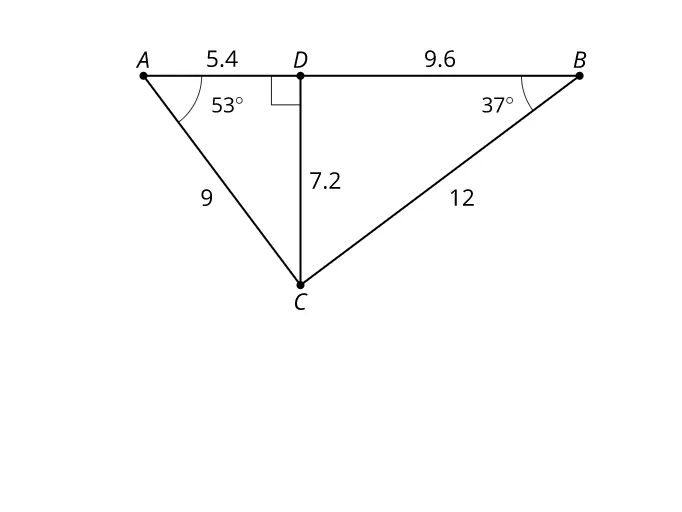
This GeoGebra example demonstrates how to apply the Pythagorean Theorem and similarity of triangles to derive relationships among segment lengths and areas, and to connect these results with a tangent-line style geometric configuration. Key concepts include the Pythagorean Theorem for right triangles (squared side relations), triangle similarity (equal angles and proportional corresponding sides), and the resulting consequences for length ratios and area ratios. From the provided construction summary context, the construction workflow is centered on creating and measuring important segments (segment/length objects), adding auxiliary lines to form the right-angle and similar-triangle structures, and using area objects to visualize how similarity transfers to area proportionality. The setup also incorporates a tangent-line related element (tangent-line object or its geometric role) to reinforce the intended geometric property. Suitable for middle/high-school learners and classroom demonstrations focused on proof by visual reasoning and structure-based problem solving.
AI Drawing Prompt Reference
Draw a geometric diagram showing how the Pythagorean theorem and triangle similarity connect segment lengths, areas, and include a tangent element. Start by constructing a right triangle, measure its sides, use similar triangles with auxiliary lines to form proportional relationships. Visualize how similarity translates to area proportionality with area objects, and add a tangent element to emphasize the geometric property.
The prompt above was compiled from the original drawing commands and is for reference only.