
Triangle Similarity Practice: Other Conditions
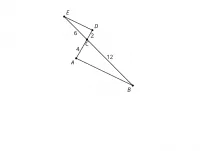
Loading the math board and drawing, please wait…
This example demonstrates how different triangle similarity criteria remain valid under geometric changes, using interactive diagram checking to help learners confirm conclusions visually and logically. The key concepts are triangle similarity conditions (angle correspondence, proportional sides, and the resulting relationships between corresponding angles and side lengths), geometric reasoning with ratios, and an intuitive connection to similarity as a transformation. Construction in GeoGebra is achieved by building the relevant triangle configurations as geometric objects and then measuring/using derived quantities—such as angles and side-length ratios—to test whether the chosen similarity conditions are satisfied. The provided input contains no explicit GeoGebra command list, so the construction focuses on the standard workflow: geometric construction plus verification of similarity criteria via measurable properties. Suitable for middle and high school geometry, also useful for training in proof-oriented problem solving and exam practice.
AI Drawing Prompt Reference
Draw a practice diagram for triangle similarity. Include two similar triangles to show angle correspondence and proportional side lengths. The construction order is to first draw one triangle, then draw a similar triangle, and label corresponding angles and side ratios. Ensure the diagram is clear to help understand similarity conditions.
The prompt above was compiled from the original drawing commands and is for reference only.