
Symmetry, Logarithmic & Polynomial Functions Intersection Demo
Loading the math board and drawing, please wait…
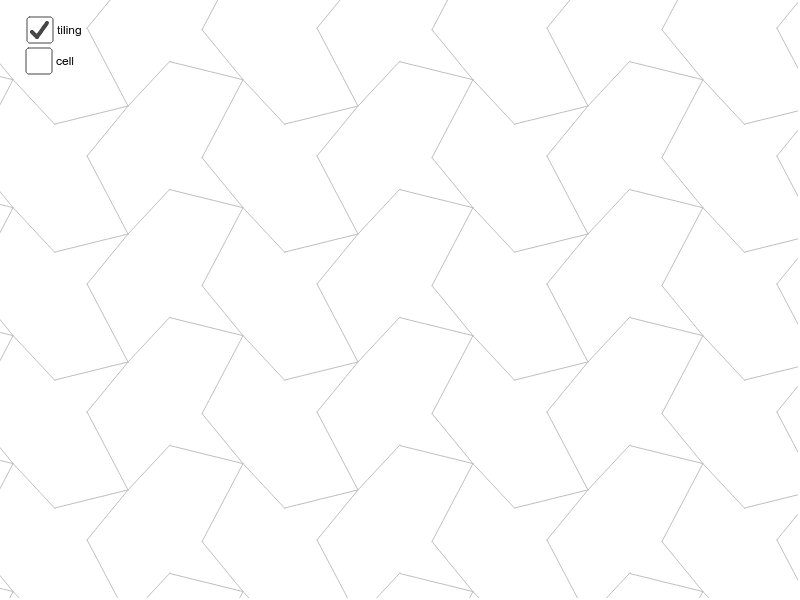
This example dynamically demonstrates symmetry transformations, logarithmic and polynomial function intersections, and their changing patterns. Core math concepts include symmetry, logarithmic functions, polynomial functions, intersection calculations, differential calculus, and complex number operations. Construction highlights involve using GeoGebra commands like Segment, Midpoint, Point, Vector, Line, Mirror, Translate, Sequence, along with objects N, M, L, K, h, g, f, J, e, cell1, A, C, H, B, u, D, F, n, cell1a, E, G, I, v, w, a, b, c, d, cell2, i, tile, tiling, j. Suitable for high school and above learners to understand function properties and transformation applications.
GeoGebra Commands & Parameters
Segment(K, N) → hSegment(K, M) → gSegment(K, L) → fSegment(J, K) → eMidpoint(C, A) → HPoint(xAxis) → BVector(A, B) → uMidpoint(B, D) → FLine(H, F) → nMirror(cell1, n) → cell1aMidpoint(A, B) → EMidpoint(D, C) → GMidpoint(C, B) → IVector(A, C) → vVector(C, D) → wVector(B, D) → aSegment(H, F) → bSegment(E, G) → cTranslate(cell1a, Vector[u / 2]) → cell2Sequence(Translate[Sequence[Translate[tile, Vector[(n * u)]], n, -3, 3], Vector[(m * v)]], m, -3, 3) → tiling
AI Drawing Prompt Reference
Create a dynamic illustration demonstrating symmetry transformations, logarithmic and polynomial function intersections. Include multiple segments, midpoints, vectors, and lines, constructed through operations like mirroring and translating, to form symmetric patterns and function intersections, showcasing the properties of logarithmic and polynomial functions and their transformations, suitable for high school and above learners.
The prompt above was compiled from the original drawing commands and is for reference only.