
Sliding Rheostat and Optimization Problem Exploration
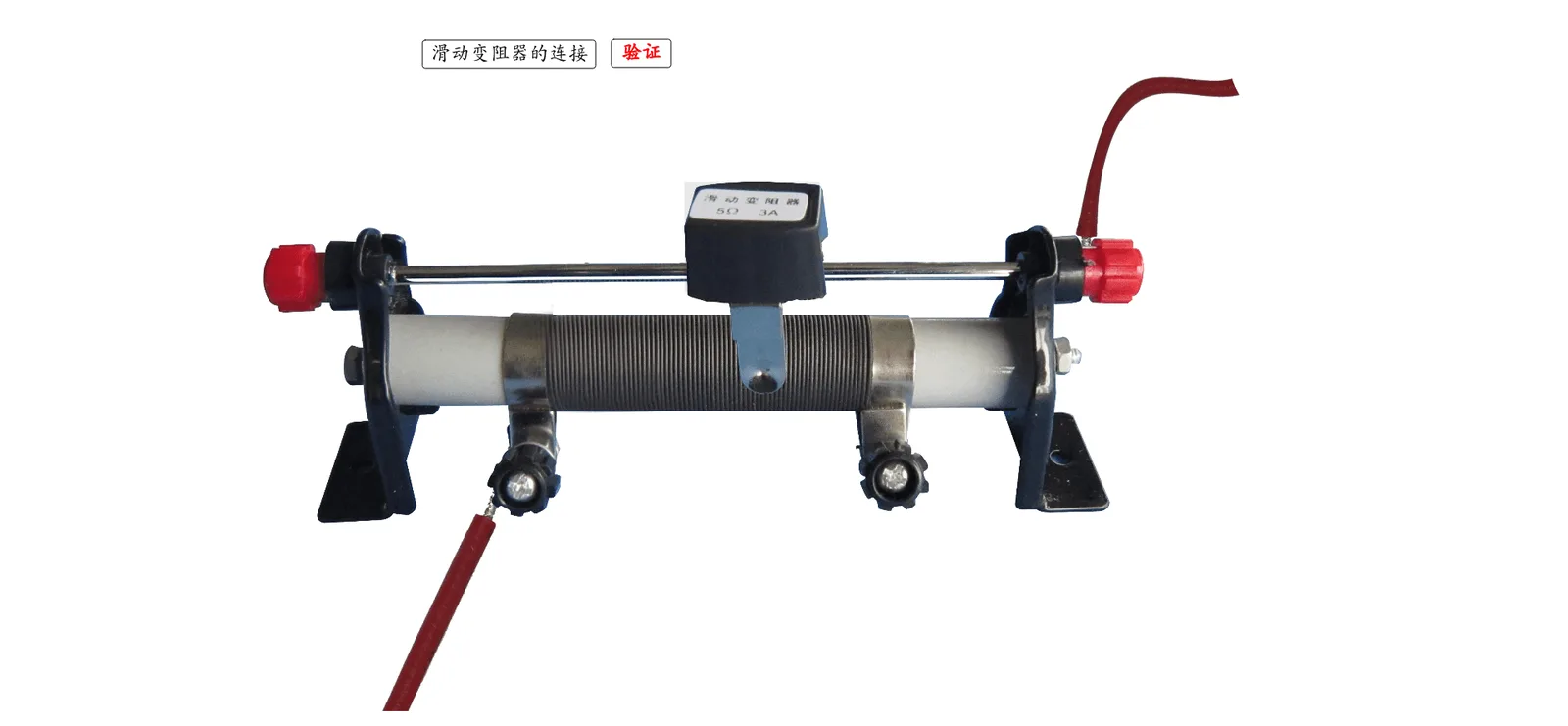
This GeoGebra applet provides an interactive and visual exploration of the mathematical principles underlying a sliding rheostat, bridging the gap between abstract mathematical optimization and practical physics applications. By combining geometric construction with dynamic function graphing, the applet builds a comprehensive mathematical model of a variable resistor circuit. The interface utilizes a coordinate system alongside geometric objects such as polygons and line segments to accurately simulate the physical structure of the circuit. This visual representation allows users to see the direct correlation between the physical movement of the rheostat wiper and the corresponding changes in the mathematical model. At the core of this exploration is the investigation of extremum and optimization problems that occur as the resistance changes. The applet incorporates division operations and specific mathematical functions, including logarithmic and algebraic expressions, to model the complex relationships between electrical variables. As the resistance varies, students can observe how these functions behave, specifically looking for maximum and minimum values that represent critical physical states. The primary interactive feature is a dynamic slider that controls the position of the sliding contact on the rheostat. As users drag the slider, the applet animates the movement in real-time, dynamically plotting the trajectories of relevant physical quantities and their corresponding mathematical functions on the graph. This real-time feedback loop is crucial for visualizing the continuous nature of the optimization process. For students, this applet serves as a powerful educational tool that demystifies the intersection of analytic geometry and physics. Instead of merely solving static equations on paper, learners can manipulate the variables and immediately see the geometric and algebraic consequences. It fosters a deeper, intuitive understanding of how optimization techniques are applied to solve real-world engineering and physics problems. By visualizing the trajectories and extreme values, students develop stronger problem-solving skills and a more profound appreciation for the utility of mathematical modeling in the physical sciences.
Loading the math board and drawing, please wait…