
S3 Ex4.3 Q01: 3D Prism Geometric Construction
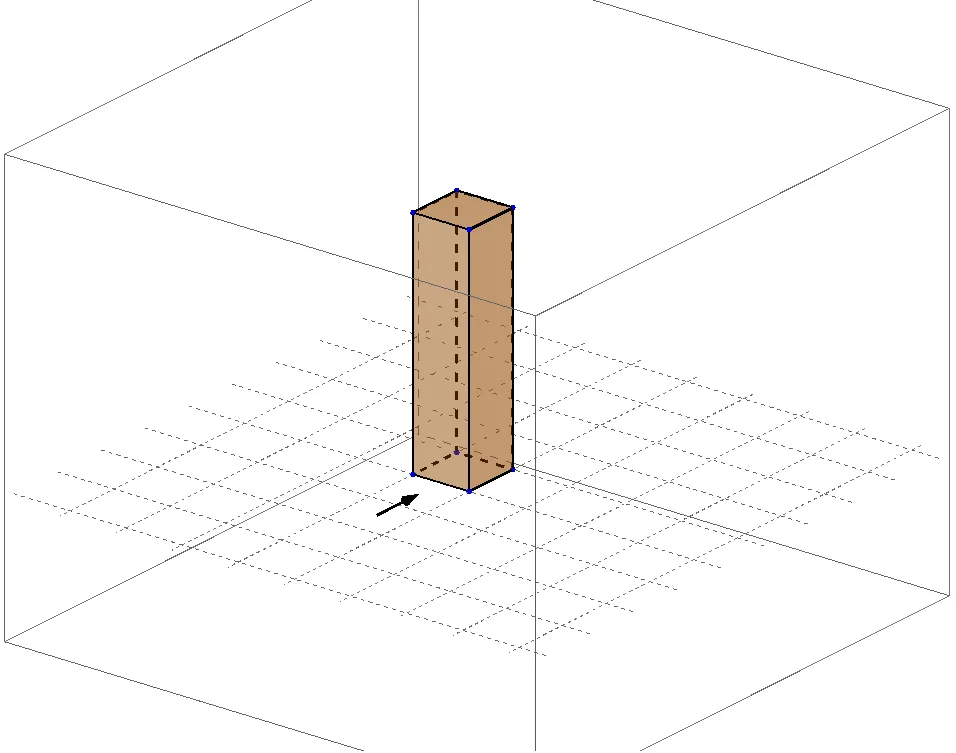
This GeoGebra example demonstrates the three-dimensional construction of a prism (angular prism) using Polygon, Prism, and Vector commands. The model features a base polygon ABCD and a top polygon EFGH, with explicitly labeled faces including faceABFE, faceBCGF, faceCDHG, faceADHE, and faceEFGH, as well as edges such as edgeAE, edgeBF, edgeCG, and edgeDH. This applet is designed for Secondary 3 solid geometry instruction and helps students visually understand the structural properties of prisms, the spatial relationships between faces and edges, and the application of vectors in three-dimensional figures. Students can interact with the model by rotating the prism in three-dimensional space to observe how corresponding faces remain parallel and congruent, and how lateral edges connect corresponding vertices of the base and top polygons. The vector commands illustrate how translation maps the base polygon onto the top polygon, reinforcing the concept that a prism is formed by translating a base polygon along a fixed direction. By manipulating the position of key vertices, learners can explore how changes to the base shape affect the overall structure while maintaining the defining properties of a prism. The explicit labeling of all faces and edges allows students to systematically identify faces, count edges and vertices, and verify Euler's formula for polyhedra. This interactive exploration supports the development of spatial reasoning skills and provides a concrete foundation for understanding more advanced topics in solid geometry such as surface area, volume, and cross-sections of prisms.
Loading the math board and drawing, please wait…