
Pythagorean Identity (Part 2): Graphical Verification via Trigonometry
Loading the math board and drawing, please wait…
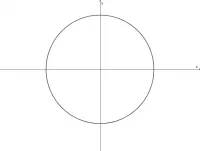
This example demonstrates the Pythagorean identity in a graphical, geometry-driven way, emphasizing how the relationship remains consistent across related configurations. It links the identity to trigonometric quantities, especially the geometric meanings of sine and cosine in right-triangle settings, and uses visual evidence from curve sketching and symmetry (e.g., reflections) to reinforce understanding. The core concepts include the Pythagorean identity, trigonometric functions (sin/cos), and the idea that geometric transformations preserve the underlying algebraic relationship. Construction-wise, the intended workflow is to place the relevant geometric objects on the coordinate plane (typically right-triangle elements that define sin and cos), then use those definitions to compare/confirm the identity by observing corresponding curves or function graph behavior. The available metadata mentions quadrilaterals, curve sketching, hyperbola, and reflection, suggesting a combined exploration of identity verification through graph-based or symmetry-based reasoning. Suitable for middle to high school math instruction, classroom demonstrations, and self-study on trigonometry and analytic geometry connections.
AI Drawing Prompt Reference
Draw a coordinate plane with a right triangle whose right angle is at the origin, one leg along the x-axis, the other along the y-axis, and the hypotenuse extending into the first quadrant. Center a unit circle at the origin so the hypotenuse is a radius. Mark the sine and cosine segments for an acute angle, each perpendicular to an axis. To the right, plot the sine curve and overlay the cosine curve, intersecting at points corresponding to projections on the unit circle. Add a reflected curve across the y-axis to show symmetry. Finally, connect points on the unit circle to their axis projections with dashed lines, forming quadrilaterals that visually verify that sine squared plus cosine squared equals one.
The prompt above was compiled from the original drawing commands and is for reference only.