
Measure Area of 2D Shapes by GeoGebra Institute of Hong Kong
Loading the math board and drawing, please wait…
In collections
P4 Area (I)
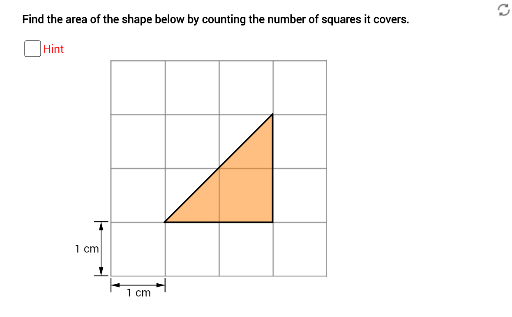
This example demonstrates how to measure the area of a 2-D shape by counting the squares it covers. It involves core math concepts like area calculation, 2D shapes, similarity transformation, ratios, and isosceles triangles. GeoGebra commands/objects used include Intersect, Point, Rotate, Polygon, Segment, and Vector. Suitable for middle school students and above to explore geometric area calculation methods and properties of similarity transformations.
GeoGebra Commands & Parameters
Intersect(xAxis, yAxis) → APoint(xAxis) → CPoint(xAxis) → FRotate(A, (-180° * t1), D) → A'Rotate(D, (-180° * t2), D) → D'Rotate(F, (-180° * t1), D) → F'Polygon(A', D', F') → poly1, f', a', d'Rotate(D, (180° * t1), D) → D'_1Rotate(E, (180° * t2), D) → E'Rotate(B, (180° * t2), D) → B'Polygon(B', D'_1, E') → poly2, e', b', d'_1Polygon(C, E, D, F) → poly3, c, e, d, fPolygon(A', D', F') → poly1', f'_1, a'_1, d'_2Polygon(B', D'_1, E') → poly2', e'_1, b'_1, d'_3Polygon(A, B, C) → poly4, c_1, a, bPolygon(A, F, D, E, B) → poly5, a_1, f_1, d_1, e_1, b_1Segment(X0, X0 + (0, 0.25)) → gSegment(X0, X0 + (0, mark)) → hSegment(X0 + (1, 0), X0 + (1, mark)) → iVector(X0 + (0, mark / 2), X0 + (1, mark / 2)) → uVector(X0 + (1, mark / 2), X0 + (0, mark / 2)) → vSegment(Y0 - (mark, 0), Y0) → jSegment(Y0 - (mark, 1), Y0 - (0, 1)) → kVector(Y0 - (mark / 2, 1), Y0 - (mark / 2, 0)) → wVector(Y0 - (mark / 2, 0), Y0 - (mark / 2, 1)) → zSegment((3, -1), (3, 3)) → l
AI Drawing Prompt Reference
Draw a 2D shape defined by three points and demonstrate how to measure its area by covering unit squares. Start by plotting the coordinate axes and finding their intersection point. Then, use rotation and similarity transformations to create two similar triangles, and calculate their areas. Represent the area of each triangle by drawing multiple unit squares of side length 1, and show the ratio of areas for similar triangles. Finally, draw a rectangle and use vector tools to further explain the area calculation method.
The prompt above was compiled from the original drawing commands and is for reference only.