
Limits Example 3: Two Sides to a Limit
Loading the math board and drawing, please wait…
In collections
BC Calculus
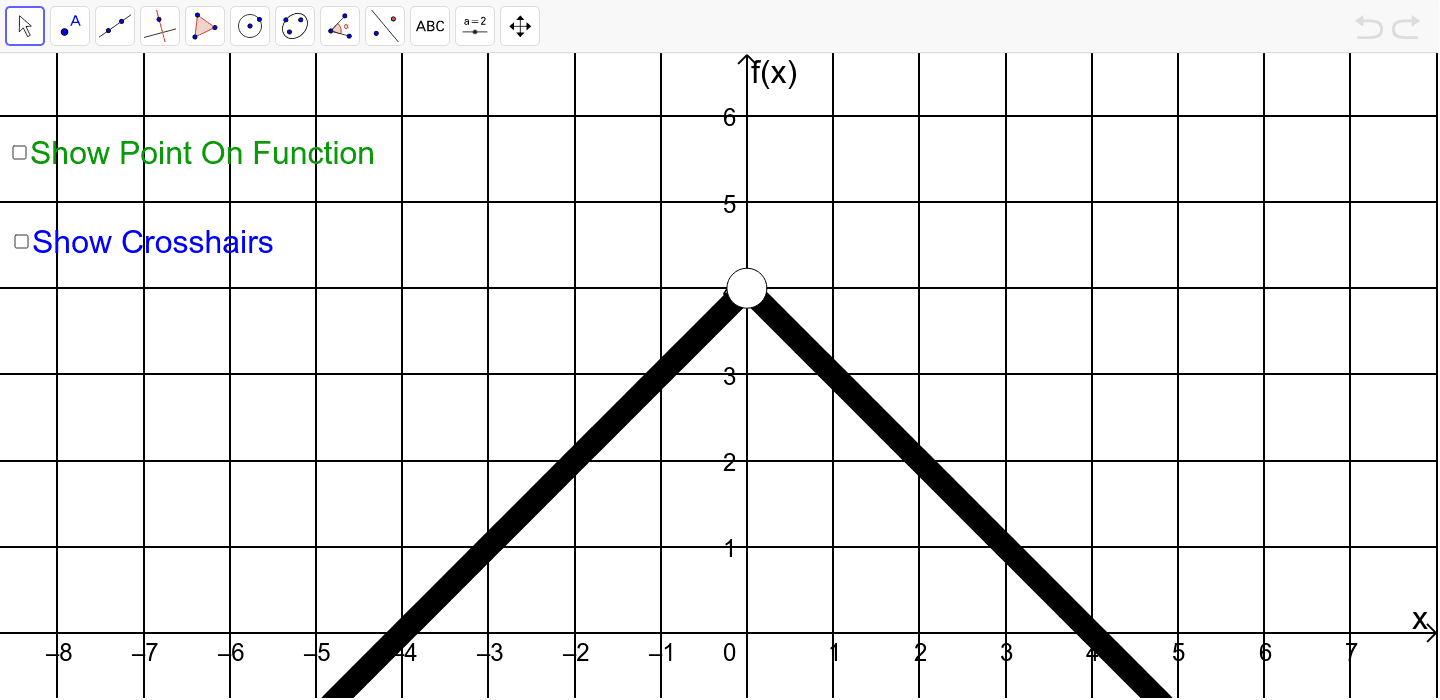
This example demonstrates the condition for a limit to exist: the function must approach the same value from both sides. It involves core math concepts like function graphing, limits, isosceles triangles, plane figures, inequalities, logarithmic functions, and standard deviation. Construction highlights include using GeoGebra commands like Point, Segment to create objects such as a, f, b, C, D, c, E, d, along with text, sliders, functions, and vectors. Suitable for high school and above learning calculus and geometric constructions.
GeoGebra Commands & Parameters
Point(f) → CSegment(C, D) → cSegment(E, C) → d
AI Drawing Prompt Reference
Draw a function graph and label the condition where it approaches the same point from both sides, showing isosceles triangles and inequalities, involving logarithmic functions and standard deviation. Start with the function curve, mark points approaching from both sides, connect them with line segments, and add text to explain the condition.
The prompt above was compiled from the original drawing commands and is for reference only.