
Geometric Transformations of Congruent Figures: Translation, Rotation, and Refle
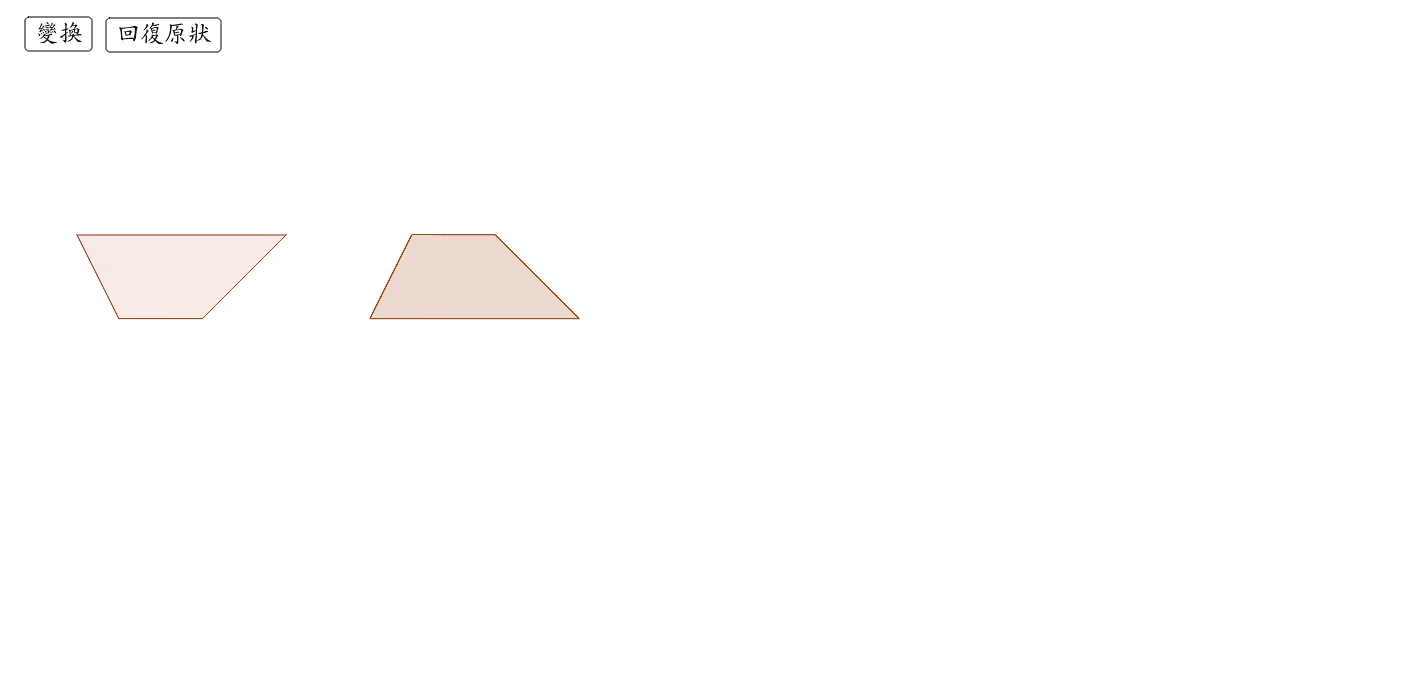
This GeoGebra applet demonstrates the concept of congruent figures in middle school mathematics by interactively showing three basic geometric transformations: translation, rotation, and reflection. Users can observe the positional changes of polygons on a plane, understand the invariance of shape and size in congruent figures, and explore the relationships between corresponding points, corresponding sides, and corresponding angles across transformed figures.
The applet is designed with interactive controls that allow students to drag, rotate, and flip polygons in real time, immediately seeing how each transformation preserves the figure's size and shape while changing its position or orientation. Through hands-on manipulation, learners discover that translated figures maintain identical side lengths and angle measures, rotated figures preserve congruence through a fixed center and angle of rotation, and reflected figures produce mirror-image counterparts equidistant from the line of reflection.
Educators can use this applet to reinforce key geometry standards, including the definition of congruence through rigid transformations, the identification of corresponding parts in congruent figures, and the properties preserved under each type of transformation. The visual and interactive nature of the applet helps students build intuition before moving to formal two-column proofs, making abstract concepts like reflectional and rotational symmetry more concrete and accessible.
The interface is clean and student-friendly, with clearly labeled controls and instant visual feedback. Teachers can project the applet during class instruction or assign it as part of independent practice, allowing learners at their own pace to experiment with different polygons and transformation parameters. This GeoGebra example is well-suited for 7th and 8th grade geometry curricula and serves as a valuable supplement to traditional textbook instruction on congruence and rigid motion.
Loading the math board and drawing, please wait…