
电流模式控制器的斜率补偿
几何画板及绘图内容加载中,请稍等……
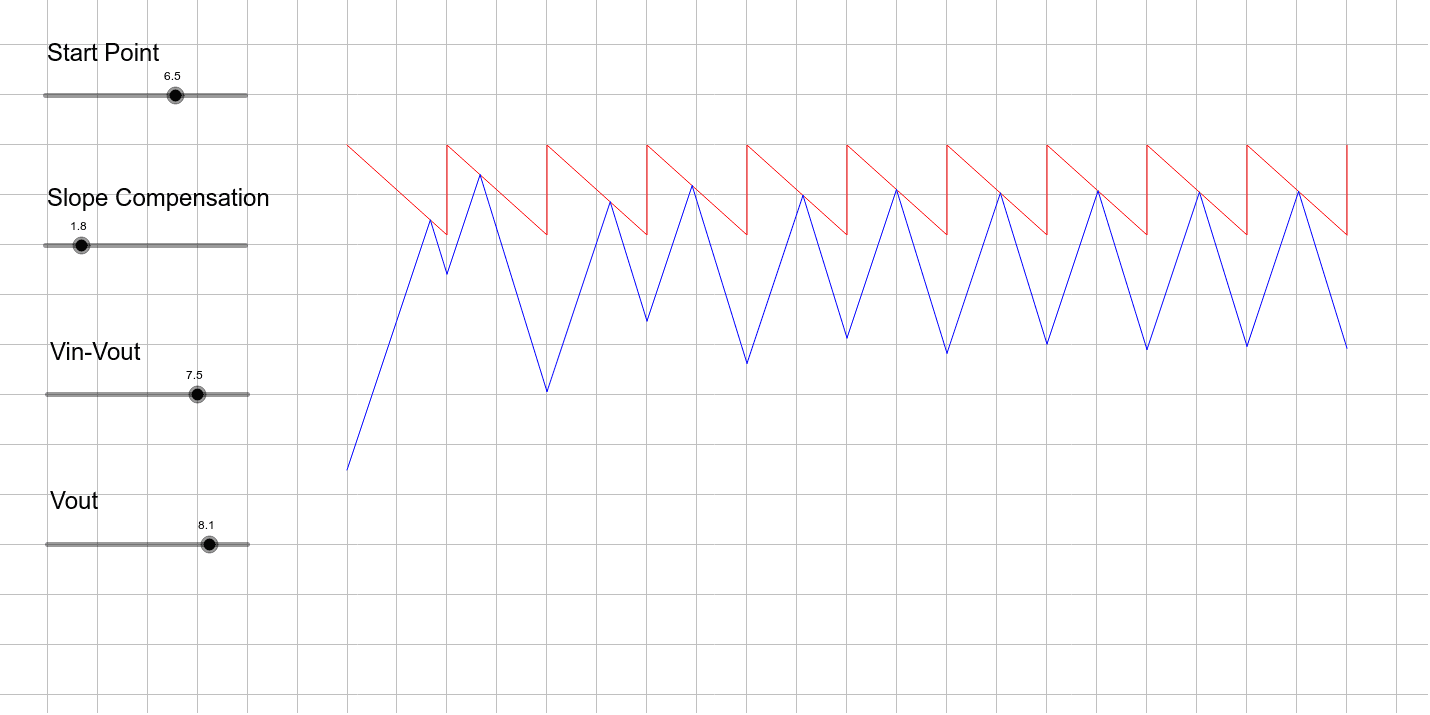
该范例演示了电流模式控制器中的斜率补偿原理。涉及的核心数学概念包括线性关系和比例。通过使用GeoGebra命令如Point, Segment, Line, PolyLine, Intersect等,构建了斜率补偿的几何模型。适合电气工程和控制理论的学习者。
GeoGebra 命令及参数
Point(yAxis) → ASegment(A, B) → aPoint(a) → CSegment(C, D) → bPoint(yAxis) → ESegment(E, F) → cPoint(a) → GPoint(c) → HSegment(G, H) → dSegment(I, J) → ePoint(a) → KPoint(c) → LSegment(K, L) → fPoint(a) → MPoint(c) → NSegment(M, N) → gPoint(a) → OPoint(c) → PPoint(a) → QPoint(c) → SSegment(Q, S) → iPoint(a) → RPoint(c) → TSegment(R, T) → jSegment(B, F) → lSegment(E, D_1) → rSegment(E_1, F_1) → sLine(G_1, s) → a_1PolyLine(E, W, A_1, D) → nIntersect(a_1, n) → H_1, I_1Line(H_1, r) → pPolyLine(D, C, B_1, H) → qIntersect(p, b) → J_1Line(J_1, a_1) → b_1Intersect(b_1, q) → K_1, L_1Segment(G_1, H_1) → c_1Segment(H_1, J_1) → d_1Segment(J_1, K_1) → e_1PolyLine(H, G, C_1, J) → f_1Line(K_1, r) → g_1Intersect(g_1, d) → M_1Line(M_1, s) → h_1Intersect(h_1, f_1) → N_1, O_1Line(N_1, r) → i_1Segment(K_1, M_1) → j_1Segment(M_1, N_1) → k_1PolyLine(J, I, P_1, L) → l_1Line(N_1, r) → m_1Intersect(m_1, e) → Q_1Line(Q_1, s) → n_1Intersect(n_1, l_1) → R_1, S_1Line(R_1, r) → q_1PolyLine(L, K, T_1, N) → r_1Intersect(q_1, f) → U_1Segment(N_1, Q_1) → a_2Segment(Q_1, R_1) → b_2Segment(R_1, U_1) → c_2Line(U_1, s) → hIntersect(h, r_1) → V_1, W_1Line(V_1, r) → s_1Intersect(s_1, g) → Z_1Intersect(c, g) → A_2Intersect(a, g) → B_2Segment(O, P) → t_1PolyLine(N, M, C_2, P) → d_2Line(Z_1, s) → e_2Intersect(e_2, d_2) → D_2, E_2Segment(U_1, V_1) → f_2Segment(V_1, Z_1) → g_2Segment(Z_1, D_2) → h_2Line(D_2, r) → i_2PolyLine(P, O, F_2, S) → j_2Intersect(i_2, t_1) → G_2Line(G_2, s) → k_2Intersect(k_2, j_2) → H_2, I_2Line(H_2, r) → p_1PolyLine(S, Q, J_2, T) → l_2Intersect(p_1, i) → K_2Line(K_2, s) → m_2Intersect(m_2, l_2) → L_2, M_2Line(L_2, r) → n_2PolyLine(T, R, N_2, V) → p_2Segment(D_2, G_2) → a_3Segment(G_2, H_2) → b_3Segment(H_2, K_2) → c_3Segment(K_2, L_2) → d_3Line(L_2, r) → kIntersect(k, j) → Q_2Line(Q_2, s) → q_2Intersect(q_2, p_2) → R_2, S_2Line(R_2, r) → r_2Segment(L_2, Q_2) → mSegment(Q_2, R_2) → s_2PolyLine(V, U, U_2, F) → f_3Intersect(r_2, f_3) → Z, T_2Line(T_2, s) → g_3Intersect(g_3, f_3) → V_2, W_2Line(V_2, r) → h_3Intersect(h_3, l) → Z_2Segment(R_2, T_2) → k_3Segment(T_2, V_2) → l_3Segment(V_2, Z_2) → m_3PolyLine(W, A_1, M, C_2, O, F_2, Q, J_2, R, N_2, U, U_2, C, B, B_1, G, C_1, I, P_1, K, T_1) → n_3