
投影示例
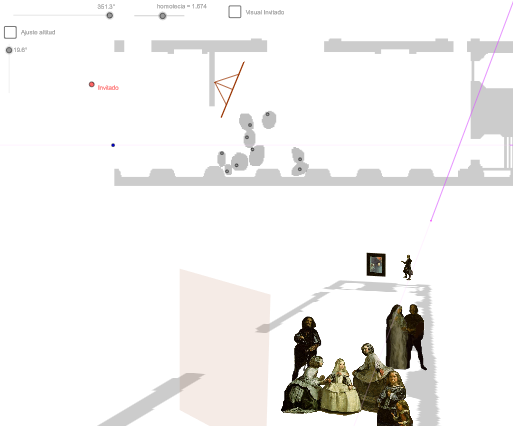
几何画板及绘图内容加载中,请稍等……
①本范例演示二维与三维向量的投影关系及几何变换;②涉及核心数学概念包括向量运算、几何变换(旋转、平移、镜像)、相似变换及坐标系;③构造中运用了OrthogonalLine(正交线)、Point(点)、Segment(线段)、Vector(向量)、Translate(平移)、Rotate(旋转)、Mirror(镜像)等GeoGebra命令;④适合高中及以上学生及数学爱好者学习向量与几何变换知识。
GeoGebra 命令及参数
OrthogonalLine(PuntoFuga, yAxis) → y01Point(y01) → Persp'If(xe ≠ x(Invitado), q(x(Invitado)), fff) → InvitadoTestIf(xe ≠ x(Mani1), q(x(Mani1)), fff) → ManiTest1OrthogonalLine(Lienzo, y01) → fPoint(f) → Af2Point(f) → Af1Segment(Af1, Af2) → jIntersect(y01, f) → LimitePoint(y01) → BRay(Limite, B) → espLimiteOrthogonalLine(IdealAux, y01) → hIntersect(h, y01) → IdealPoint(espLimite) → EspectadorSegment(Espectador, Invitado) → seg15If(xe ≠ x(Mani2), q(x(Mani2)), fff) → ManiTest2Segment(C1, D) → seg13Point(seg13) → KMidpoint(C1, D) → JOrthogonalLine(J, seg13) → perpbastRay(Espectador, PuntoFuga) → rayo01OrthogonalLine(PL4, y01) → x10Point(y01) → XPLRotate((-3, 6), α, (-3, 5)) → Z1Ellipse((-3, 4.38), (-3, 5.62), 0.65) → zElipse2Rotate(zA, a, zB) → XYOrthogonalLine(Invitado, xAxis) → x06Line(PL2, Persp') → pers2Line(PL1, Persp') → pers1If(ajusta, Z0, Z1) → ZPunto3D(XY, Z, Maniqui3D1) → Maniqui3D1'Punto3D(XY, Z, Maniqui3D3) → Maniqui3D3'If(((auxRadioInvitado * radioEspectador) * (x(B) - x(PuntoFuga)) / (x(B) - x(Invitado))) > radioEspectador, radioEspectador, ((auxRadioInvitado * radioEspectador) * (x(B) - x(PuntoFuga)) / (x(B) - x(Invitado)))) → radioMaxPunto3D(XY, Z, Invitado3D) → Invitado'Punto3D(XY, Z, Reyes3) → Reyes3'Punto3D(XY, Z, Reyes2) → Reyes2'Punto3D(XY, Z, Reyes1) → Reyes1'Vector(Reyes1', Reyes2') → uTranslate(Reyes3', u) → Reyes4'Punto3D(XY, Z, Reyes1Espectador) → Reyes1Espectador'Punto3D(XY, Z, Reyes2Espectador) → Reyes2Espectador'OrthogonalLine(A, y01) → x08Point(x08) → RE2Dilate(RE2, homotecia, Espectador) → RE2'Mirror(RE2', x08) → IM2Point(x08) → RE1Dilate(RE1, homotecia, Espectador) → RE1'Mirror(RE1', x08) → IM1bSegment(IM1b, RE1) → seg03Line(IM2, seg13) → recta03Intersect(recta03, seg03) → IM1Polygon(RE1, IM1, IM2, RE2) → cuad02, cuad02b, cuad02c, cuad02d, cuad02aMirror(RE1', cuad02a) → RE1''Ray(RE1, RE1'') → rayo07Intersect(seg13, rayo07) → CDOrthogonalLine(CD, y01) → x04Punto3D(XY, Z, CE3D) → CE'Ray(Reyes3', CE') → rayo04Punto3D(XY, Z, CD3D) → CD'Ray(Reyes1Espectador', CD') → rayo09Punto3D(XY, Z, CD23D) → CD2'Ray(Reyes1', CD2') → rayo05Mirror(RE2', cuad02a) → RE2''Ray(RE2, RE2'') → rayo08Intersect(seg13, rayo08) → CCOrthogonalLine(CC, y01) → x01Punto3D(XY, Z, CC3D) → CC'OrthogonalLine(IM2s, xAxis) → x07Vector(CD', CC') → vTranslate(CE', v) → CE''Segment(CE', CE'') → seg07Line(IM2s, seg07) → recta10Intersect(rayo09, recta10) → COrthogonalLine(C, xAxis) → x09Intersect(rayo05, x09) → UIntersect(rayo04, x09) → TRay(Reyes4', CE'') → rayo02Intersect(rayo02, x07) → RTranslate(CD2', v) → CD2''Ray(Reyes2', CD2'') → rayo06Intersect(rayo06, x07) → SLine(D, C1) → recta14OrthogonalLine(D, y01) → x14Segment(CD2'', CD2') → seg04OrthogonalLine(IM2, y01) → x03OrthogonalLine(IM1, y01) → x02Punto3D(XY, Z, Fuga2) → Fuga2'Punto3D(XY, Z, Fuga1) → Fuga1'Line(Fuga2', Fuga1') → recta02Angle((-2, 5), (-3, 5), XY) → zAngRotSegment((-3.65, 5) + O, (-2.35, 5) + O) → zSeg3Punto3D(XY, Z, plano2) → plano2'Punto3D(XY, Z, plano1) → plano1'Punto3D(XY, Z, plano3) → plano3'Punto3D(XY, Z, Agu1) → Agu1'Punto3D(XY, Z, Agu2) → Agu2'Punto3D(XY, Z, Agu3) → Agu3'Punto3D(XY, Z, Esp1) → Esp1'Punto3D(XY, Z, Esp2) → Esp2'Punto3D(XY, Z, Esp3) → Esp3'Punto3D(XY, Z, Isa1) → Isa1'Punto3D(XY, Z, Isa2) → Isa2'Punto3D(XY, Z, Isa3) → Isa3'Punto3D(XY, Z, Jos1) → Jos1'Punto3D(XY, Z, Jos2) → Jos2'Punto3D(XY, Z, Jos3) → Jos3'Punto3D(XY, Z, Marc1) → Marc1'Punto3D(XY, Z, Marc2) → Marc2'Punto3D(XY, Z, Marc3) → Marc3'Punto3D(XY, Z, Mari1) → Mari1'Punto3D(XY, Z, Mari2) → Mari2'Punto3D(XY, Z, Mari3) → Mari3'Punto3D(XY, Z, Mas1) → Mas1'Punto3D(XY, Z, Mas2) → Mas2'Punto3D(XY, Z, Mas3) → Mas3'Punto3D(XY, Z, Vel1) → Vel1'Punto3D(XY, Z, Vel2) → Vel2'Punto3D(XY, Z, Vel3) → Vel3'Punto3D(XY, Z, pl1) → pl1'Punto3D(XY, Z, pl2) → pl2'Punto3D(XY, Z, pl3) → pl3'Punto3D(XY, Z, zonaizq2) → zonaizq2'Punto3D(XY, Z, zonader1) → zonader1'Punto3D(XY, Z, zonader3) → zonader3'Punto3D(XY, Z, zonafon3) → zonafon3'Punto3D(XY, Z, zonafon2) → zonafon2'Punto3D(XY, Z, zonafon1) → zonafon1'Punto3D(XY, Z, zonafren1) → zonafren1'Punto3D(XY, Z, zonafren2) → zonafren2'Punto3D(XY, Z, zonafren3) → zonafren3'Point(recta02) → PerspLine(pl1', Persp) → recta01Line(pl3', zonafon3') → recta05Line(zonader1', Persp) → recta04Line(zonaizq2', Persp) → recta06Line(zonafon1', zonafon2') → recta07Line(zonafren1', zonafren2') → recta08Intersect(recta06, recta08) → GIntersect(recta04, recta08) → HLine(zonafren3', recta08) → recta09Intersect(recta06, recta09) → IPunto3D(XY, Z, Espectador3D) → Espectador3D'Punto3D(XY, Z, Persp3D) → Persp3D'Dilate(Reyes1', homotecia, Espectador3D') → Reyes1''Dilate(Reyes2', homotecia, Espectador3D') → Reyes2''Polygon(Espectador, RE2, RE1) → trian01, trian01b, trian01a, trian01cIntersect(pers2, x10) → PF2Punto3D(XY, Z, PF23D) → PF23D'OrthogonalLine(C1, y01) → x11OrthogonalLine(C2, y01) → x12Punto3D(XY, Z, C13D) → C13D'Punto3D(XY, Z, C23D) → C23D'Intersect(f, perpbast) → ESegment(J, E) → seg01Segment(K, E) → seg14Mirror(K, perpbast) → FSegment(F, E) → seg02Dilate(Reyes3', homotecia, Espectador3D') → Reyes3''Polygon(Espectador3D', Reyes2', Reyes1') → trian03, trian03b, trian03a, trian03cCircle(Espectador3D', radioEspectador) → cirEspectadorCircle(Fuga1', radioFuga) → cirFugaPolygon(Espectador3D', Reyes3', Reyes4') → trian06, trian06c, trian06a, trian06bMirror(Invitado, seg01) → Invitado'1Mirror(Invitado, cuad02a) → Invitado'2Segment(Espectador, Invitado'2) → seg09Intersect(cuad02a, seg09) → LSegment(Invitado, L) → seg10Segment(Espectador, L) → seg11Ray(Espectador, K) → rayo11Ray(Espectador, M) → rayo12Line(M, D) → recta11OrthogonalLine(Invitado, rayo11) → recta12OrthogonalLine(Invitado, rayo12) → recta13OrthogonalLine(Invitado, recta11) → recta15Intersect(rayo11, recta12) → NIntersect(rayo12, recta13) → PSegment(Invitado', Espectador3D') → seg05Segment(CD2', CE') → seg06Segment(CE'', CD2'') → seg08Polygon(R, TT, UU, S) → cuad04, cuad04a, cuad04b, cuad04c, cuad04dPolygon(Reyes1', UU, TT, Reyes3') → cuad05, cuad05a, cuad05b, cuad05c, cuad05dRay(Reyes2Espectador', CC') → rayo10Polygon(TT, R, Reyes4', Reyes3') → cuad07, cuad07a, cuad07b, cuad07c, cuad07dPolygon(R, S, Reyes2', Reyes4') → cuad08, cuad08a, cuad08d, cuad08b, cuad08cPolygon(S, UU, Reyes1', Reyes2') → cuad09, cuad09a, cuad09b, cuad09c, cuad09dPolygon(Reyes2', Reyes4', Espectador3D') → trian10, trian10a, trian10b, trian10cPolygon(Reyes1', Reyes3', Espectador3D') → trian11, trian11a, trian11b, trian11cPunto3D(XY, Z, L3D) → L3D'Segment(Espectador3D', L3D') → p2Intersect(recta14, x06) → VSegment(L3D', Invitado') → seg12Point(x14) → A1OrthogonalLine(A1, y01) → x13Punto3D(XY, Z, A13D) → A13D'Punto3D(XY, Z, D3D) → D3D'Vector(A13D', D3D') → wPunto3D(XY, Z, D4D) → D4D'Translate(D4D', Vector[(w * 1.25)]) → D4D''Punto3D(XY, Z, C14D) → C14D'Polygon(D3D', D4D'', C14D', C13D') → cuad12, cuad12c, cuad12d, cuad12b, cuad12aRay(Espectador3D', Fuga1') → rayo03Ray(Invitado, Espectador) → bIntersect(seg13, b) → WIf(W ≟ W, false, true) → conInvSegment(Espectador, PuntoFuga) → cSegment(Espectador3D', Fuga1') → dCircle(Invitado', radioMax) → cirInvitadoPunto3D(XY, Z, Maniqui3D2) → Maniqui3D2'Line(Invitado, Espectador) → iPunto3D(XY, Z, PL33D) → PL33D'Punto3D(XY, Z, PL43D) → PL43D'Punto3D(XY, Z, PL53D) → PL53D'Punto3D(XY, Z, PL63D) → PL63D'Punto3D(XY, Z, PL73D) → PL73D'Punto3D(XY, Z, PL83D) → PL83D'Point(f) → Li2Point(f) → Li3OrthogonalLine(Li2, f) → eOrthogonalLine(Li3, f) → gPunto3D(XY, Z, Li13D) → Li13D'Punto3D(XY, Z, Li23D) → Li23D'Punto3D(XY, Z, Li33D) → Li33D'Punto3D(XY, Z, Li43D) → Li43D'Mirror(D, perpbast) → D'OrthogonalLine(Ideal, e) → perpIdealIntersect(j, seg15) → InvitadoLienzoPunto3D(XY, Z, InvitadoLienzo3D) → InvitadoLienzo3D'Punto3D(XY, Z, RE13D) → RE13D'Punto3D(XY, Z, RE23D) → RE23D'
AI 绘图提示语参考
绘制一个三维投影演示图,包含一个透视点、一条竖直参考轴和一条水平参考轴。从透视点向竖直轴作垂线,在垂线上取多个点,并连接形成线段与射线。在水平轴上放置一个观察者点,从观察者向透视点作射线。构造一个椭圆和旋转后的点,表示三维物体的投影变换。通过垂线、交点、中点、平移、旋转和镜像等操作,生成多个三维点及其投影,并用向量连接这些点,展示二维与三维之间的投影关系。
以上提示语为根据原始绘图命令整理而来,仅供参考。