
估计角度交互练习
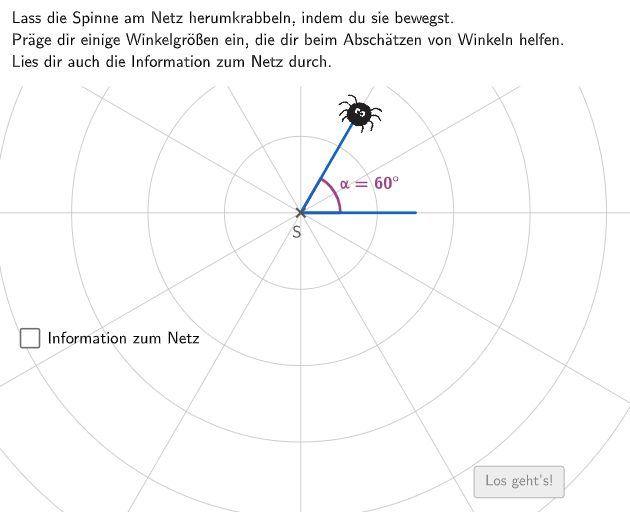
几何画板及绘图内容加载中,请稍等……
这是一个角度估计交互式练习范例。学生在屏幕上观察随机显示的角度图形,通过目测估计角度大小并输入答案,系统会自动验证答案正确性,记录正确率和练习次数。核心数学概念包括角度的度量、估计技巧以及角度与旋转的关系。构造要点:使用Sequence和Random命令生成随机角度,使用Angle命令绘制待估计的角度图形,通过Textfield接收用户输入,使用条件判断验证答案正确性,并利用Text命令动态显示反馈信息。适合中学数学课堂的角概念教学、自测练习或家庭作业,可帮助学生建立良好的角度感知能力。
GeoGebra 命令及参数
Shuffle(Sequence[Random[271, 345], i, 1, 120]) → randomNosForX4, {313, 288, 327, 344, 342, 305, 323, 286, 325, 340, 309, 336, 325, 335, 272, 318, 342, 309, 286, 325, 340, 273, 301, 334, 336, 339, 337, 281, 297, 302, 275, 310, 316, 336, 288, 298, 272, 301, 319, 324, 279, 301, 336, 320, 299, 330, 328, 309, 345, 345, 303, 328, 338, 299, 343, 345, 330, 274, 331, 303, 326, 340, 328, 294, 315, 325, 300, 294, 284, 321, 306, 286, 341, 277, 273, 309, 297, 309, 335, 271, 307, 291, 285, 328, 341, 313, 272, 290, 329, 342, 293, 304, 300, 328, 325, 320, 308, 331, 324, 306, 309, 323, 301, 312, 294, 328, 299, 285, 294, 300, 310, 288, 318, 303, 272, 337, 315, 324, 331, 314}Shuffle(Sequence[Random[181, 270], i, 1, 120]) → randomNosForX3, {206, 269, 200, 218, 203, 245, 267, 268, 230, 270, 212, 240, 192, 221, 194, 269, 256, 264, 266, 200, 252, 268, 231, 202, 230, 246, 213, 248, 238, 211, 256, 255, 248, 257, 224, 221, 264, 199, 234, 264, 239, 252, 195, 218, 241, 181, 246, 228, 203, 239, 262, 234, 243, 231, 191, 216, 227, 198, 252, 212, 265, 189, 246, 265, 206, 240, 254, 259, 194, 249, 201, 183, 241, 216, 195, 211, 253, 251, 209, 206, 220, 228, 265, 192, 246, 186, 263, 238, 187, 188, 193, 230, 260, 205, 201, 260, 195, 259, 197, 264, 218, 190, 215, 214, 189, 222, 263, 216, 268, 213, 192, 251, 189, 230, 241, 267, 203, 201, 207, 214}Shuffle(Sequence[Random[91, 180], i, 1, 120]) → randomNosForX2, {100, 122, 169, 135, 99, 163, 102, 151, 153, 113, 123, 110, 175, 112, 116, 132, 171, 98, 140, 170, 136, 175, 177, 114, 115, 172, 143, 147, 95, 106, 130, 159, 179, 102, 139, 129, 130, 163, 157, 155, 108, 131, 134, 116, 172, 139, 93, 123, 112, 106, 164, 146, 100, 169, 155, 95, 109, 144, 92, 108, 136, 154, 134, 103, 124, 156, 139, 108, 177, 133, 156, 166, 114, 162, 125, 163, 175, 176, 94, 105, 135, 106, 168, 167, 138, 153, 157, 171, 130, 180, 126, 93, 122, 113, 157, 119, 154, 155, 110, 107, 92, 179, 104, 127, 160, 160, 103, 112, 175, 114, 137, 93, 156, 130, 178, 153, 99, 146, 139, 100}Join(Sequence[Shuffle[Sequence[1, 4]], m, 1, 30]) → randomCasesShuffle(Sequence[Random[10, 90], i, 1, 120]) → randomNosForX1, {17, 35, 18, 36, 32, 68, 48, 18, 60, 53, 69, 57, 86, 35, 74, 72, 55, 77, 13, 26, 49, 58, 41, 16, 47, 59, 73, 47, 57, 88, 75, 84, 90, 83, 72, 79, 76, 20, 33, 71, 50, 17, 70, 56, 67, 86, 29, 60, 77, 51, 81, 44, 90, 25, 89, 16, 40, 49, 86, 39, 54, 27, 50, 32, 67, 47, 70, 30, 66, 35, 11, 75, 67, 42, 59, 32, 83, 60, 33, 35, 62, 33, 55, 82, 67, 86, 83, 45, 29, 81, 86, 30, 83, 37, 76, 43, 75, 88, 38, 19, 75, 49, 42, 19, 32, 51, 32, 79, 56, 75, 68, 61, 57, 89, 61, 18, 36, 54, 12, 60}Zip(Element[{a, b, c, d}, m], a, randomCases, randomNosForX1, b, randomNosForX2, c, randomNosForX3, d, randomNosForX4, m) → randomNosForXElement(randomNosForX, Mod[questionCount, 100] + 1) → numXText(input1) → textinput1Textfield(input1) → InputBox1Textfield(input2) → InputBox2Polygon(PtopLeftCornerFeedback, PtopRightCornerFeedback, PbottomRightCornerFeedback, PbottomLeftCornerFeedback) → rectangleCorrect, rectangleCorrectS3, rectangleCorrectS4, rectangleCorrectS2, rectangleCorrectS1Shuffle(Sequence[Random[0, 10], i, 1, 100]) → randomNosForY, {0, 0, 4, 5, 10, 7, 5, 9, 4, 7, 8, 4, 6, 3, 1, 3, 3, 3, 2, 5, 4, 9, 8, 8, 5, 5, 5, 10, 1, 5, 4, 10, 5, 8, 7, 7, 0, 10, 8, 3, 8, 3, 3, 2, 2, 6, 10, 0, 2, 3, 0, 3, 8, 9, 5, 10, 4, 3, 2, 7, 4, 7, 9, 3, 6, 10, 5, 2, 2, 0, 1, 5, 1, 6, 4, 3, 10, 5, 7, 4, 5, 6, 9, 10, 4, 5, 2, 9, 1, 3, 0, 8, 3, 7, 2, 4, 5, 1, 9, 5}Element(randomNosForY, Mod[questionCount, 100] + 1) → numYAppend(true, Sequence[If[randomNosForX(i) ≟ randomNosForX(i - 1), false, true], i, 2, 100]) → stayXAppend(true, Sequence[If[randomNosForY(i) ≟ randomNosForY(i - 1), false, true], i, 2, 100]) → stayYRemove(Sequence[If[stayX(i), randomNosForX(i), 0], i, 1, 100], Sequence[0, i, 1, 100]) → randomNosForXwithoutRepeatRemove(Sequence[If[stayY(i), randomNosForY(i), 0], i, 1, 100], Sequence[0, i, 1, 100]) → randomNosForYwithoutRepeatElement(randomNosForXwithoutRepeat, Mod[questionCount, Length[randomNosForXwithoutRepeat]] + 1) → numXwithoutRepeatElement(randomNosForYwithoutRepeat, Mod[questionCount, Length[randomNosForYwithoutRepeat]] + 1) → numYwithoutRepeatDefined(input1) → fixedSequence(Rotate[(circlewidth, 0), m°], m, 0, 360) → listCirclePointsPoint(listCirclePoints) → PAngle(Vector[(circlewidth, 0)], Vector[P]) → αVector((0, 0), P) → uRotate((1, 0), (0.5 * α)) → MRotate((circlewidth, 0), numXwinkel) → P2Angle(P2) → β
AI 绘图提示语参考
画一个包含四个圆的图形,每个圆代表一个角度,圆心与圆心之间的连线表示角度之间的关系。图形中有四个圆,分别代表 90 度、180 度、270 度和 360 度的角度。每个圆的半径相同,圆心之间的距离也相同。画出四个圆,连接每对圆心,形成一个四边形。
以上提示语为根据原始绘图命令整理而来,仅供参考。