
Visual Practice: The Pythagorean Identity (Part 1)
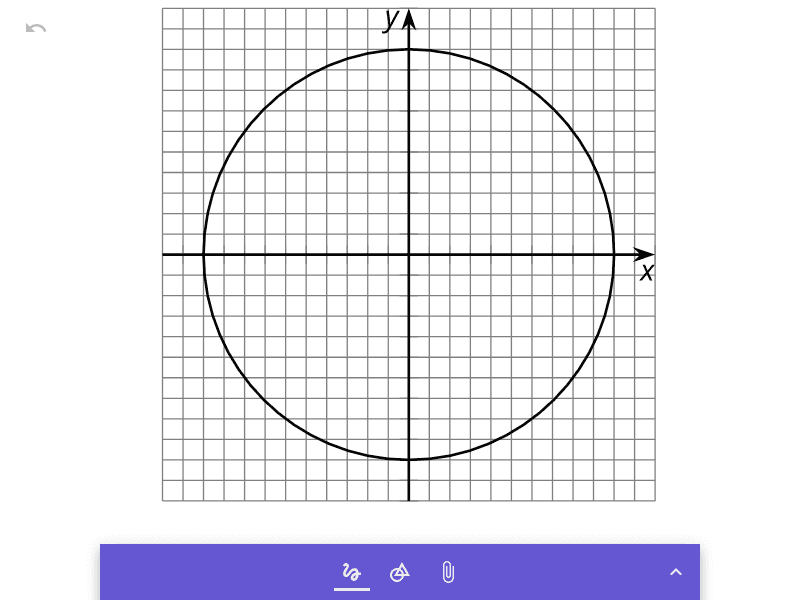
Loading the math board and drawing, please wait…
This example demonstrates how the Pythagorean identity can be visualized through geometric configurations, linking an algebraic equality with concrete geometric length or area relationships. The key mathematics includes the Pythagorean theorem/its rearrangements, the Pythagorean identity expressed via squared terms, and the idea of verifying an identity by constructing and comparing measurable quantities from a right-triangle-type setup. Since the provided GeoGebra construction summary contains no specific commands, the typical construction for this kind of lesson focuses on creating the underlying right-triangle geometry (or an equivalent configuration), marking relevant segments and the right angle, and then relating squared lengths to the identity’s terms using standard measurement/annotation objects. Suitable for secondary school learners and early algebra/precalculus students, especially for integrating geometry reasoning with algebraic identities.
AI Drawing Prompt Reference
Draw a right triangle, mark the legs and hypotenuse, and label their squared lengths. Connect these lengths to show the geometric meaning of the Pythagorean theorem. Ensure the diagram is clear and labels are easy to understand, suitable for learning geometry and algebraic relationships.
The prompt above was compiled from the original drawing commands and is for reference only.