
Prisms Practice: Building Solids from Base Polygons to Coordinates
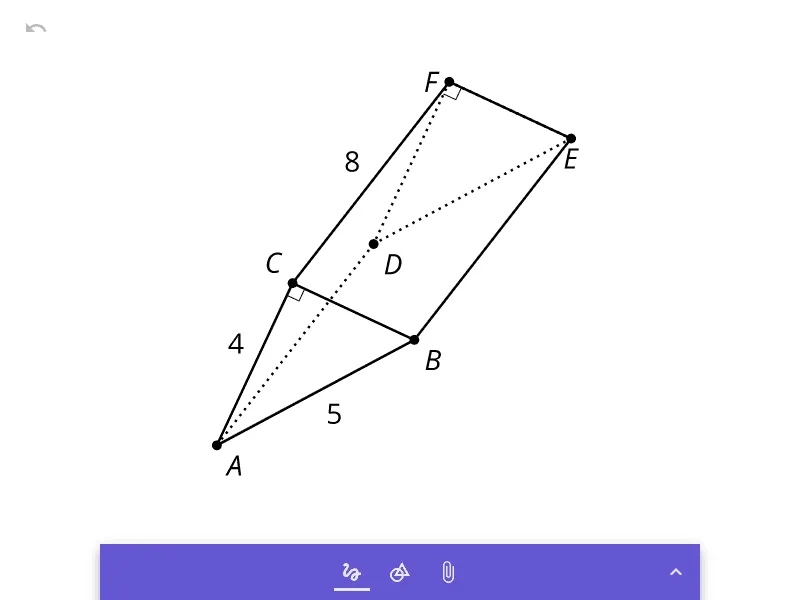
Loading the math board and drawing, please wait…
This example demonstrates how to construct a prism in a coordinate-based GeoGebra environment and examine how the base polygon determines the lateral faces through corresponding vertices. Key mathematical ideas include the definition of a prism (two congruent, parallel bases connected by edges), properties of polygons, coordinate geometry for positioning vertices, and (when needed) root expressions to represent lengths via coordinate differences. The provided construction summary contains no explicit GeoGebra commands, so the construction workflow is inferred: create the base polygon by defining its vertices, generate a congruent parallel copy for the second base (e.g., by using a translation or specifying the height via a vector), then connect corresponding vertices to form the lateral edges and side faces; finally, use coordinate/distance checks to verify edge lengths and alignment. Suitable for middle and high school learners studying solid geometry and for practice-focused teaching on geometric construction with coordinates.
AI Drawing Prompt Reference
Draw a prism made of two parallel parallelograms. The first parallelogram is the base, and the second is the top, connected by corresponding vertices to form lateral faces. Ensure the bases are congruent and parallel, and the sides are rectangles. Use coordinates to locate vertices and verify edge lengths.
The prompt above was compiled from the original drawing commands and is for reference only.