
Practicing Intersections by [email protected]
Loading the math board and drawing, please wait…
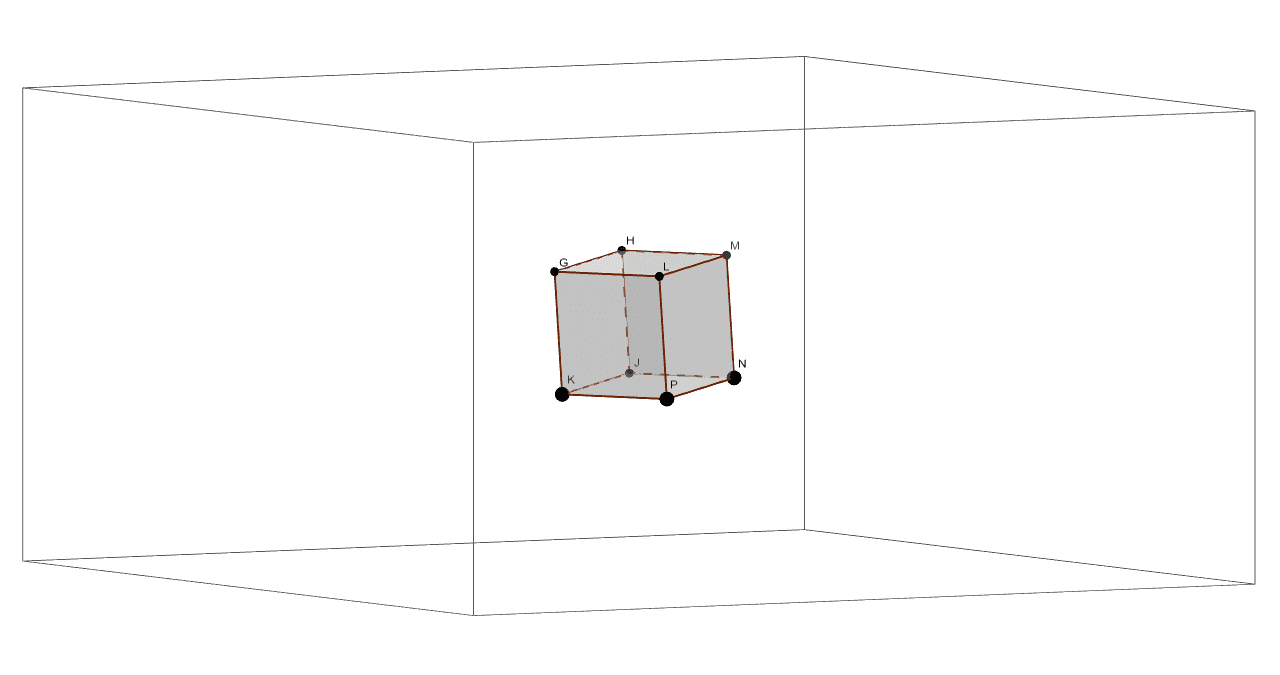
This example demonstrates the intersection relationships among multiple points, lines, and faces within a cube. Core mathematical concepts include intersections, equilateral triangles, angles, median values, distributions, and logic. The construction leverages GeoGebra commands such as Point and Cube, along with objects like K, P, N, a, J, G, L, M, H, faceABCD, faceADHE, faceABFE, faceBCGF, faceCDHG, faceEFGH, edgeAD, edgeAB, edgeBC, edgeCD, edgeAE, edgeDH, edgeEH, edgeEF, edgeBF, edgeFG, edgeCG, edgeGH. It is suitable for high school students studying solid geometry, providing practice in understanding and applying intersection concepts in spatial geometry.
GeoGebra Commands & Parameters
Point(Circle[P, Distance[K, P], Segment[K, P]]) → NCube(K, P, N) → a, J, faceCDHG, faceEFGH, edgeAD, edgeAB, edgeBC, edgeCD, edgeAE, edgeDH, edgeEH, edgeEF, G, edgeBF, edgeFG, edgeCG, edgeGH, L, M, H, faceABCD, faceADHE, faceABFE, faceBCGF
AI Drawing Prompt Reference
Draw a cube using points K and P. Create a circle with these points and find a point N on the circle. Then construct the cube with six faces and twelve edges. Pay attention to the intersection points between faces and edges, especially where faces meet and where edges intersect.
The prompt above was compiled from the original drawing commands and is for reference only.