
Integer Comparison and Sorting - Basic Math Application
Loading the math board and drawing, please wait…
In collections
Ganze Zahlen & Arbeiten mit der Zahlengerade
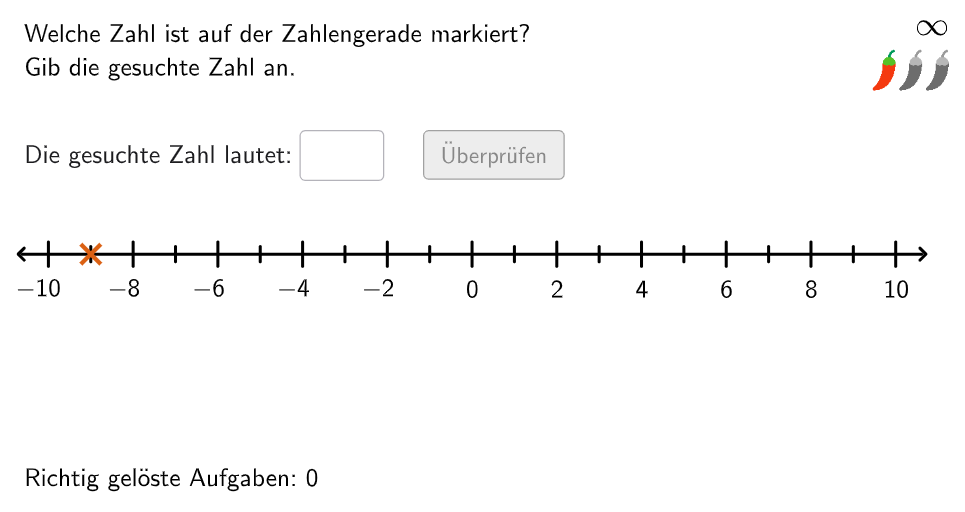
This example demonstrates how to compare and sort integers to understand their magnitude. Key mathematical concepts include integer comparison, sorting, and representation on the number line. Construction involves GeoGebra commands like Join, Sequence, Random, and others to create integer sequences and comparison tools. Suitable for elementary students in grades 5-6 to reinforce integer operations and number sense.
GeoGebra Commands & Parameters
Join({{2}, Sequence[RandomElement[{2, 3, 4, 5}], k, 1, 99]}) → StepCList1Sequence(RandomElement[{2, 3, 4, 5}], k, 1, 100) → StepCList2, {3, 2, 2, 2, 4, 3, 2, 2, 5, 5, 3, 3, 2, 3, 3, 3, 5, 4, 4, 2, 2, 5, 4, 2, 4, 2, 3, 3, 4, 5, 4, 3, 2, 4, 5, 2, 3, 5, 2, 2, 5, 4, 5, 2, 3, 4, 2, 3, 3, 4, 2, 2, 5, 4, 3, 4, 4, 4, 4, 2, 2, 5, 3, 4, 4, 3, 2, 2, 4, 5, 2, 4, 2, 4, 3, 3, 5, 3, 5, 5, 2, 4, 4, 4, 4, 3, 4, 3, 3, 3, 3, 4, 3, 5, 5, 2, 4, 5, 4, 3}Random(-20, -10, 100) → StartList2, {-18, -16, -12, -15, -18, -13, -11, -12, -18, -15, -14, -16, -16, -17, -12, -16, -12, -11, -12, -17, -20, -16, -20, -18, -18, -10, -20, -17, -15, -10, -17, -18, -13, -14, -12, -13, -20, -10, -17, -10, -16, -12, -17, -12, -20, -12, -18, -13, -19, -12, -12, -10, -11, -18, -10, -16, -11, -19, -13, -10, -20, -14, -13, -17, -10, -17, -18, -19, -13, -13, -15, -12, -18, -19, -12, -10, -11, -15, -14, -13, -11, -17, -20, -12, -11, -11, -15, -18, -11, -12, -19, -12, -13, -18, -17, -18, -16, -13, -14, -10}Sequence(RandomElement[Remove[(StartList2(k))…(StartList2(k) + 20), Sequence[(m * StepCList2(k)), m, -25, 25]]], k, 1, 100) → NumberList2, {-10, -15, -7, -13, -11, -4, 5, -7, -4, 1, -10, -13, -1, -7, -1, -7, -8, 3, 6, -3, -9, -7, -15, -5, -9, -3, -17, -14, -13, -7, -7, -7, -11, -2, 2, -1, -16, -1, -5, -1, -2, -3, -9, 7, -10, -1, 1, 4, -1, 7, 7, 5, -8, 1, -7, -14, 3, 1, -2, 3, -11, 6, -10, -7, -2, 2, -3, -15, 6, -1, -9, -5, -7, -15, 2, -5, 3, -10, -14, 1, -11, -5, -10, -2, 5, 4, -3, -14, -8, 4, -8, 2, -13, -2, -13, -5, -2, -3, 6, 5}Sequence(RandomElement[{2, 3, 4, 5}], k, 1, 100) → StepCList3, {3, 5, 3, 3, 2, 5, 5, 5, 5, 3, 3, 2, 4, 3, 3, 5, 4, 5, 3, 4, 5, 3, 2, 2, 4, 4, 4, 4, 2, 3, 2, 2, 2, 2, 3, 3, 4, 3, 3, 5, 4, 5, 5, 3, 5, 4, 4, 5, 5, 5, 3, 4, 3, 5, 2, 3, 3, 5, 4, 4, 4, 3, 2, 3, 4, 2, 2, 2, 5, 3, 4, 5, 5, 2, 3, 5, 3, 5, 3, 5, 4, 2, 3, 4, 5, 5, 3, 4, 3, 4, 5, 3, 5, 4, 4, 4, 2, 3, 5, 2}Element(If[level ≟ 1, StepCList1, level ≟ 2, StepCList2, StepCList3], counter) → stepCIf(level ≟ 1, 21, level ≟ 2, 21, 21) → anzahlSequence(-10, k, 1, 100) → StartList1Random(-50, 30, 100) → StartList3, {28, 13, -11, 25, -48, 18, -49, 28, 4, -45, 25, -9, -5, 29, 28, -27, -3, 29, 27, 28, -47, 20, -49, -9, -47, -45, 21, 28, 0, -16, 11, 19, 11, -5, -28, -23, -16, -48, 17, -16, -36, 22, -46, -46, 13, 29, 2, 16, -14, -47, -44, 17, 7, -14, -46, 19, 15, 9, 3, -24, 19, -16, 1, -49, -19, -21, 19, -40, 9, -37, -4, 23, 30, 8, -46, 23, 23, -23, -36, -14, -45, -37, 22, -1, -6, -6, 19, -5, -32, -25, 2, 4, -15, -8, -29, 11, -7, -29, -23, 1}If(level ≟ 1, StartList1(counter), level ≟ 2, StartList2(counter), StartList3(counter)) → startNumberIf(show0, Mod[(-startNumber), stepC], 0) → diffSequence(RandomElement[Join[{Remove[-10…10, Sequence[(m * StepCList1(k)), m, -100, 100]], Remove[-10…-1, Sequence[(m * StepCList1(k)), m, -100, 100]]}]], k, 1, 100) → NumberList1, {-9, -7, 7, -7, -9, -1, -5, -3, -7, -9, 10, -9, -9, 7, 5, -9, 5, 5, 1, -7, -10, 7, 3, -8, -9, -4, -2, 1, 7, -2, -10, -3, 5, -7, -1, -4, -8, -7, -4, -6, 9, -5, -1, -1, -1, 3, -7, 9, -9, -3, -2, -1, 1, -1, 7, -1, 9, 2, -1, 3, -9, -3, -7, -1, -1, -1, -7, -3, -5, -8, -7, -5, -1, -9, 1, 4, -5, -6, -2, 2, 7, -5, 4, -1, 1, 9, -3, -2, -10, -9, 4, -5, -5, 9, -7, -9, -6, -7, -3, -9}Sequence(RandomElement[Remove[(StartList3(k))…(StartList3(k) + 20), Sequence[(m * StepCList3(k)), m, -25, 25]]], k, 1, 100) → NumberList3, {29, 14, 7, 40, -41, 38, -31, 33, 7, -37, 28, 11, 6, 38, 31, -26, 1, 29, 46, 41, -31, 35, -43, 7, -42, -45, 25, 33, 5, 2, 21, 27, 17, -3, -28, -22, -5, -34, 17, 1, -29, 31, -27, -31, 23, 39, 10, 22, -14, -46, -29, 18, 19, 6, -35, 32, 16, 13, 14, -22, 27, -10, 5, -37, -17, -19, 31, -33, 13, -22, 15, 34, 36, 13, -28, 33, 23, -22, -25, -3, -35, -35, 25, 18, -2, -3, 32, 9, -17, -19, 18, 20, -1, -5, -21, 25, 1, -10, -18, 3}Element(If[level ≟ 1, NumberList1, level ≟ 2, NumberList2, NumberList3], counter) → numberSequence(Random[1, 10], i, 1, 10) → randomNumbers, {8, 10, 6, 10, 6, 1, 7, 2, 9, 9}Element(randomNumbers, Mod[questionCount, Length[randomNumbers]] + 1) → randomNumberTextfield(input) → inputBoxDefined(input) → clickableBtnValidateSegment(Origin + ((-lengthAxis) - 0.5, 0), Origin + (lengthAxis + 0.5, 0)) → segAxisSequence(Origin + ((-lengthAxis), 0) + (((k * 2) * lengthAxis / (anzahl - 1)), 0), k, 0, anzahl - 1) → PointsListSequence(Origin + ((-lengthAxis), 0) + (((k * 2) * lengthAxis / (anzahl - 1)), 0), k, 0, anzahl - 1, stepM) → SelectablePointsSequence(Segment[PointsList(k) + (0, If[Mod[NumbersOnAxis(k), stepC] ≟ 0, (-segLength2), (-segLength1)]), PointsList(k) + (0, If[Mod[NumbersOnAxis(k), stepC] ≟ 0, segLength2, segLength1])], k, 1, 21, stepM) → SegAxisListSequence((If[startNumber < 0, ceil(startNumber / stepC), startNumber > 0, floor(startNumber / stepC), 0] * stepC) + (k * stepC), k, 0, floor(anzahl / stepC)) → NumbersCap, {-10, -8, -6, -4, -2, 0, 2, 4, 6, 8, 10}Sequence(Text[(((((("\textsf{" * If[k < 0, "\(", ""]) * "") * k) * "") * If[k < 0, "\)", ""]) * "\vphantom{2}}"), PointsList(k - startNumber + 1) + (If[k < 0, -0.166, 0], (-segLength2)), false, true, 0, -1], k, startNumber + diff, startNumber + anzahl - 1 + diff, stepC) → CapListSequence(Text[(((((("\textcolor{" * If[NumbersOnAxis(k) ∈ NumbersCap, "#000000", NumbersOnAxis(k) ≟ number, "#006758", "616161"]) * "}{\textsf{") * If[NumbersOnAxis(k) ∈ NumbersCap, "\small{\(", NumbersOnAxis(k) ≟ number, "\small{\(", "\scriptsize{\("]) * "") * NumbersOnAxis(k)) * "\)}}}"), SelectablePoints(k) + (If[NumbersOnAxis(k) < 0, -0.166, 0], (-segLength2)) + If[NumbersOnAxis(k) ≥ 0 ∧ (NumbersOnAxis(k) ∈ NumbersCap ∨ NumbersOnAxis(k) ≟ number), (0, 0), NumbersOnAxis(k) ≥ 0, (-0.02, 0), (0.05, 0)], false, true, 0, -1], k, 1, Length[NumbersOnAxis], 1) → CapListSolTranslate(imgChilliRot1, Vector[PosImgChilliRot1, PosImgChilliRot1 + ((0.8 * dimChilli), 0)]) → imgChilliRot2Translate(imgChilliRot1, Vector[(2 * Vector[PosImgChilliRot1, PosImgChilliRot1 + ((0.8 * dimChilli), 0)])]) → imgChilliRot3Translate(imgChilliGrau1, Vector[PosImgChilliRot1, PosImgChilliRot1 + ((0.8 * dimChilli), 0)]) → imgChilliGrau2
AI Drawing Prompt Reference
Draw a coordinate plane with a horizontal number line. Place a row of equally spaced, clickable tick points along the axis and label the corresponding integers at those positions, including negative values, zero, and positive values. Below or along the axis, generate a discrete set of integers using a chosen start number and step size, and use these values as inputs for a basic compare/sort task. Construct small segment-like highlights on the axis that follow the step-based alignment rules so that selected integer locations are visually emphasized and aligned to the tick grid. Finally, add a comparison indicator that, depending on a selected mode (different levels), determines which integer sequence is used for the labeled target number.
The prompt above was compiled from the original drawing commands and is for reference only.