
P4 Area Practice 2: Polygon Translation and Area Exploration
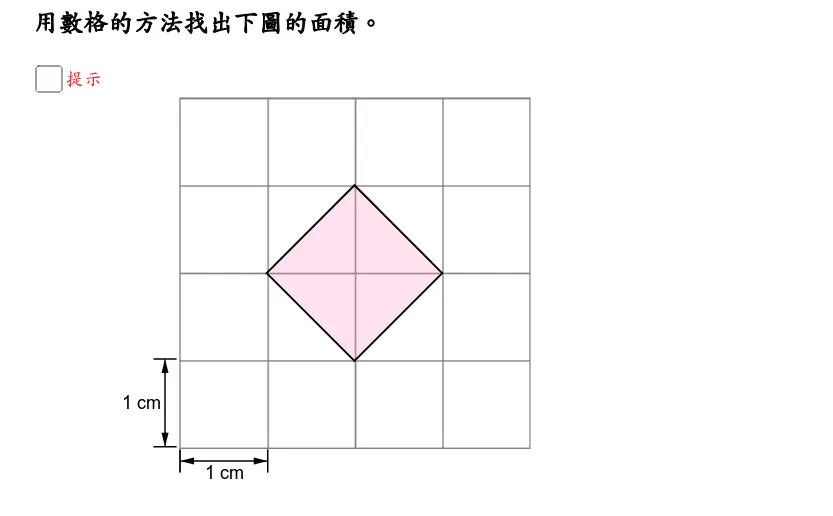
This GeoGebra example is an area practice exercise that uses Segment, Vector, Translate, and Polygon commands to construct geometric figures and demonstrate area relationships under translation transformations. The example includes original polygon vertices (A, B, C, D, E) and their translated counterparts (A', B', C', D', E'), using vectors to control translation direction and distance. It helps students visually understand the property that area remains unchanged during rigid transformations such as translation. The applet allows learners to manipulate the vector controlling the translation, observing in real time how the polygon moves while its area stays constant. Text annotations are provided alongside the diagram to guide students through problem-solving steps, reinforcing the concept that translation is a rigid motion that preserves both shape and area. This interactive exploration is well-suited for elementary or middle school mathematics instruction on area concepts and geometric transformations. By dragging the vector arrow, students can see the polygon shift across the coordinate plane, and the area values of both the original and translated polygons are displayed to confirm they are identical. This hands-on experience builds intuition before students encounter formal proofs, making it an effective teaching and practice tool for understanding the conservation of area under translation.
In collections
Interactive Geometry: Area
Loading the math board and drawing, please wait…