
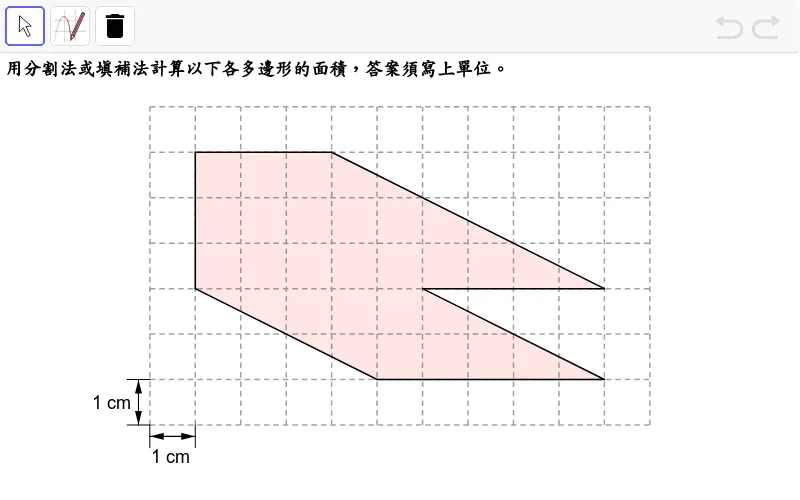
Polygon Area Calculation and Geometric Transformation (Problem 8)
This GeoGebra mathematical example demonstrates the calculation of polygon areas through dynamic geometric modeling. By utilizing basic geometric objects such as points, segments, vectors, and polygons, combined with sequence commands, a fully interactive geometric model is constructed. The applet covers core mathematical concepts including polygons, geometric transformations, trigonometry, and the Pythagorean theorem, and may also involve area derivation related to solid geometry elements such as pyramids. Users can manipulate vertices and parameters in real time to observe how changes affect the overall area, gaining an intuitive visual understanding of the underlying geometric principles. Through drag-and-drop interactions, students can explore different methods of computing polygon areas, including decomposition into triangles, application of vector cross products, and use of coordinate geometry formulas. The integration of geometric transformations allows learners to see how translations, rotations, reflections, and scaling preserve or alter area relationships. Trigonometric relationships and the Pythagorean theorem are visually reinforced as tools for deriving side lengths and angles necessary for accurate area computation. This interactive approach bridges the gap between abstract formulas and concrete geometric intuition, enabling students to develop a deeper conceptual grasp of polygon area calculation. The applet is particularly useful for classroom demonstration, self-directed exploration, and reinforcing theoretical knowledge through hands-on experimentation with dynamic geometry software.
In collections
Grade 5 Semester 1: Area (Part 2)
Loading the math board and drawing, please wait…