
Multiple Choice: Graphs of Direct Proportional Relationships
Loading the math board and drawing, please wait…
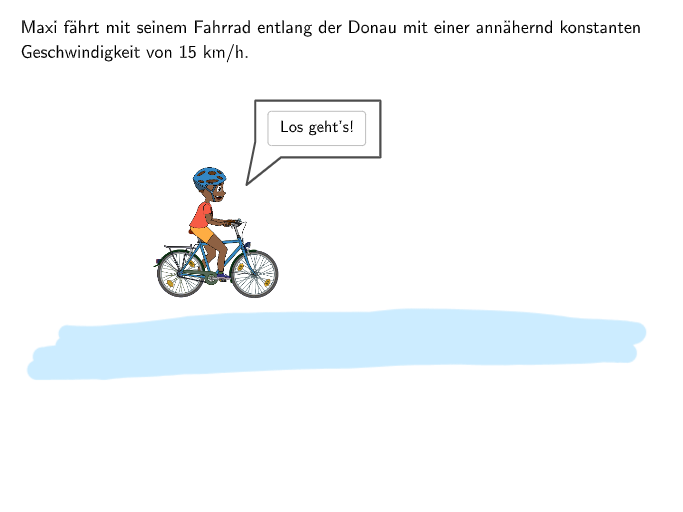
This example uses multiple-choice questions to demonstrate the graphical representation of direct proportional relationships. Key mathematical concepts include proportions and function graphs. It utilizes GeoGebra commands such as Point, Sequence, If, Flatten, Zip, Segment, Join, Textfield, and SpeechBubbleLeft, suitable for middle school students to learn about direct and indirect proportions and
GeoGebra Commands & Parameters
Point(Sequence[S + ((m * lengthschritt / 60) - 1, 0.3), m, 9, 69]) → VSequence(S + ((m * lengthschritt / 60) - 1, 0.3), m, 0, 60) → pointszkleinUPoint(pointszkleinU) → USequence(S + (m * (lengthschritt / 5, 0)), m, 0, 5) → pointszIf(step < 3, sizecoordy1, sizecoordy2) → sizecoordyIf(step < 3, O1, If[step ≟ 5, O2, O3]) → OIf(step < 3, sizecoordx1, sizecoordx2) → sizecoordxFlatten(Sequence[Sequence[O + (m * (sizecoordx, 0)) + (j * (0, sizecoordy)), m, 0, widthcoord], j, 0, heightcoord + 1]) → l1Sequence(O + ((2 * m) * (sizecoordx, 0)), m, 1, (widthcoord - 2) / 2) → pointsxZip(Segment[A + (0, (-heightlines)), A + (0, heightlines)], A, pointsx) → linesxSegment(l1(1), l1(widthcoord)) → xlineSegment(l1(1), l1(((widthcoord + 1) * (heightcoord + 1)) - widthcoord)) → ylineZip(Segment[A + ((-heightlines), 0), A + (heightlines, 0)], A, pointsy1 \ {O}) → linesyZip(Segment[A + ((-heightlines2), 0), A + (heightlines2, 0)], A, pointsy2) → linesy2Sequence(Text["\textsf{" + (m) + "}", (((2 * m) * sizecoordx) + x(O), y(O) - 0.9), true, true, -0, 1], m, 0, widthcoord / 2 - 1) → textxSequence(Text[(("\textsf{" * ReplaceAll["" + ((m * 10)) + "", ".", ","]) * "}"), (x(O) - 0.6, ((2 * m) * sizecoordy) + y(O) - 0.4), true, true, -0, 1], m, 1, (heightcoord - 1) / 2) → textyZip(Segment[A + (0, (-heightlinesz)), A + (0, heightlinesz)], A, pointsz) → lineszJoin({{Text["\textsf{Start}", (x(S) + 0.1, y(S) - 1), true, true, -0, 1]}, Sequence[Text["\textsf{" + (m) + ((" h" * "}")), ((m * lengthschritt / 5) + x(S) + 0.1, y(S) - 1), true, true, -0, 1], m, 1, 5]}) → textzSequence(O + (m * ((2 * sizecoordx), ((1.5 * 2) * sizecoordy))), m, 1, 5) → pointsfTextfield(input1) → Eingabefeld1Textfield(input4) → Eingabefeld2Point(Line[C, xAxis]) → DPoint(Line[E, xAxis]) → FPoint(Line[G, xAxis]) → HPoint(Line[I, xAxis]) → JPoint(Line[K, xAxis]) → LSegment(O, OZ) → fSpeechBubbleLeft(M, 2.3, 0.95) → Vieleck1Segment(S, S + (lengthschritt, 0)) → gSequence(S + ((m * lengthschritt / 60) - 1, 0.3), m, 9, 69) → pointszkleinVSpeechBubbleLeft(B_1, 1.8, 0.65) → Vieleck2