
Calculate Surface Area of Cuboids with GeoGebra
Loading the math board and drawing, please wait…
In collections
Wiederholung: Quader und Würfel
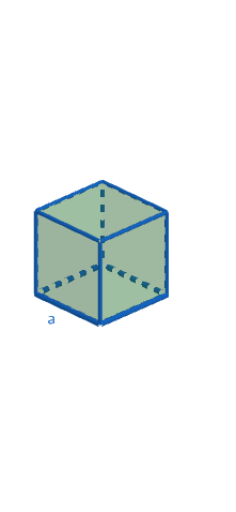
This example demonstrates calculating the surface area of cubes and rectangular prisms using GeoGebra. Key mathematical concepts include surface area formulas, geometric surface area calculations, and differences between cubes and prisms. Construction involves GeoGebra commands like Remove, Shuffle, Sequence, Flatten, Element, Polygon, Prism, and adjusting parameters to observe changes in surface
GeoGebra Commands & Parameters
Remove(Join[Join[Sequence[Sequence[Sequence[{i, j, k}, k, j, 6], j, i, 6], i, 2, 6]]], Sequence[{a, a, a}, a, 1, 6]) → randomTripelUniqueShuffle(Zip[Shuffle[a], a, randomTripelUnique]) → randomTripleUniqueShuffle, {{4, 5, 3}, {2, 4, 2}, {3, 5, 6}, {4, 2, 6}, {3, 4, 6}, {4, 3, 4}, {4, 4, 6}, {4, 5, 4}, {6, 6, 3}, {3, 4, 3}, {5, 5, 3}, {2, 2, 5}, {5, 6, 6}, {6, 5, 2}, {2, 4, 4}, {2, 3, 4}, {5, 2, 5}, {4, 6, 5}, {6, 6, 4}, {2, 2, 3}, {5, 5, 6}, {6, 3, 3}, {4, 2, 5}, {3, 3, 2}, {3, 2, 5}, {6, 2, 3}, {5, 3, 3}, {2, 6, 6}, {5, 5, 4}, {6, 2, 2}}Sequence(Element[randomTripleUniqueShuffle(i), 3], i, 1, Length[randomTripleUniqueShuffle]) → randomcSequence(Element[randomTripleUniqueShuffle(i), 2], i, 1, Length[randomTripleUniqueShuffle]) → randombFlatten(Sequence[Shuffle[{"Quader", "Quader", "Quader", "Würfel"}], i, 1, 30]) → randomNosForXElement(randomNosForX, Mod[questionCount, 100] + 1) → numXSequence(Element[randomTripleUniqueShuffle(i), 1], i, 1, Length[randomTripleUniqueShuffle]) → randomaElement(randoma, Mod[questionCount, Length[randoma]] + 1) → numaIf(numX ≟ "Würfel", numa, Element[randomc, Mod[questionCount, Length[randomc]] + 1]) → numcIf(numX ≟ "Würfel", numa, Element[randomb, Mod[questionCount, Length[randomb]] + 1]) → numbTextfield(aInput) → InputBox1Textfield(bInput) → InputBox2Polygon(PtopLeftCornerFeedback, PtopRightCornerFeedback, PbottomRightCornerFeedback, PbottomLeftCornerFeedback) → rectangleCorrect, ptopleftcornerfeedback, ptoprightcornerfeedback, pbottomrightcornerfeedback, pbottomleftcornerfeedbackShuffle(Sequence[Random[0, 10], i, 1, 100]) → randomNosForY, {5, 6, 2, 0, 5, 4, 6, 2, 1, 0, 8, 1, 0, 4, 7, 4, 7, 9, 7, 0, 0, 2, 6, 6, 3, 0, 7, 8, 7, 10, 10, 3, 5, 1, 1, 5, 2, 0, 6, 4, 6, 3, 1, 1, 3, 8, 2, 3, 9, 3, 1, 8, 7, 9, 0, 6, 10, 10, 0, 8, 9, 7, 6, 5, 7, 3, 0, 6, 7, 7, 0, 0, 8, 1, 9, 5, 2, 5, 4, 0, 3, 4, 0, 1, 5, 9, 1, 7, 9, 8, 6, 5, 0, 5, 2, 6, 4, 7, 1, 3}Element(randomNosForY, Mod[questionCount, 100] + 1) → numYAppend(true, Sequence[If[randomNosForX(i) ≟ randomNosForX(i - 1), false, true], i, 2, 100]) → stayXAppend(true, Sequence[If[randomNosForY(i) ≟ randomNosForY(i - 1), false, true], i, 2, 100]) → stayYRemove(Sequence[If[stayX(i), randomNosForX(i), 0], i, 1, 100], Sequence[0, i, 1, 100]) → randomNosForXwithoutRepeatRemove(Sequence[If[stayY(i), randomNosForY(i), 0], i, 1, 100], Sequence[0, i, 1, 100]) → randomNosForYwithoutRepeatElement(randomNosForXwithoutRepeat, Mod[questionCount, Length[randomNosForXwithoutRepeat]] + 1) → numXwithoutRepeatElement(randomNosForYwithoutRepeat, Mod[questionCount, Length[randomNosForYwithoutRepeat]] + 1) → numYwithoutRepeatPoint(Circle[A, numa]) → BSegment(A, B) → gSegment(B, C) → hSegment(C, D) → iSegment(D, E) → jPolygon(D, C, B, A) → v1, m, n, p, qPrism(v1, numc) → a, F, KanteDF, KanteCG, KanteBH, KanteEI, KanteFG, KanteGH, KanteHI, KanteFI, G, H, I, FlächeCDFG, FlächeBCGH, FlächeBEIH, FlächeDEIF, FlächeFGHINet(a, k) → l, J, S, T, U, V, W, FlächeJKLM, FlächeJKON, FlächeKLQP, FlächeLMSR, FlächeJMTU, K, FlächeNOVW, KanteJK, KanteKL, KanteLM, KanteJM, KanteJN, KanteNO, KanteKO, KanteKP, KantePQ, L, KanteLQ, KanteLR, KanteRS, KanteMS, KanteMT, KanteTU, KanteJU, KanteOV, KanteVW, KanteNW, M, N, O, P, Q, R